
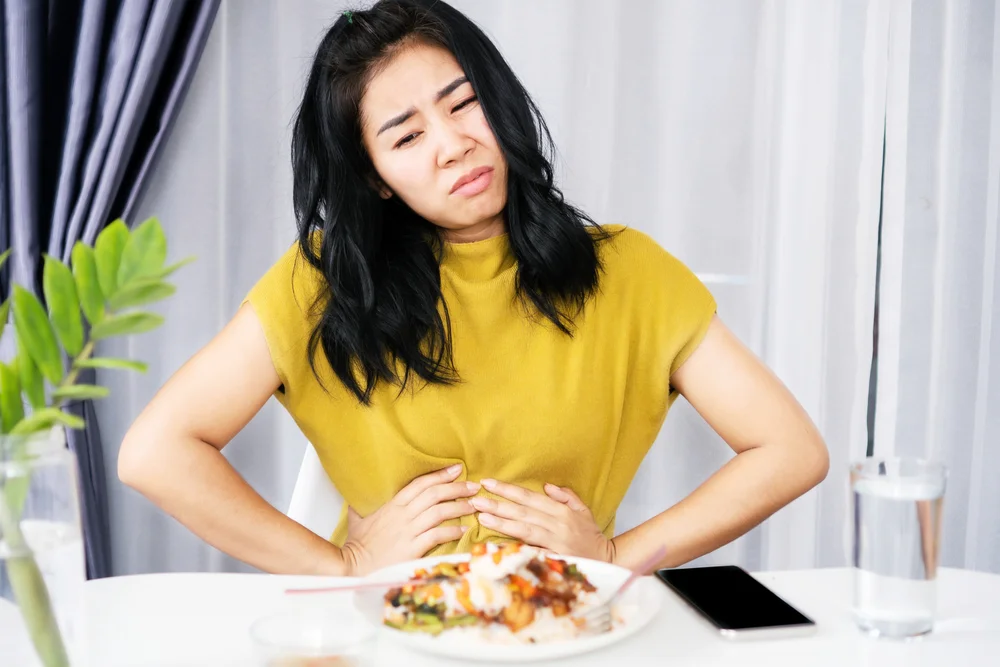
Cramping during or after meals can come from gas, bowel activity, indigestion, food intolerance, or several other digestive problems. What matters most is the pattern: where the discomfort occurs, how soon it starts after eating, what accompanies it, and whether the episodes are becoming more frequent or intense.
What Can Meal-Related Cramps Feel Like?
Digestive cramps may feel tight, squeezing, dull, or wave-like. Some people notice bloating or an urge to have a bowel movement at the same time, while others experience discomfort higher in the abdomen with fullness, belching, or nausea.
Location alone cannot identify the cause. MedlinePlus notes that abdominal pain has many potential sources, and even the intensity of pain does not always indicate how serious the underlying issue is.
Record Timing Instead of Guessing at Foods
Write down what you ate, how large the meal was, when discomfort began, where it occurred, and how long it lasted. Include bowel changes, nausea, bloating, heartburn, and anything unusual about the meal.
People browsing wellness information pages may see long lists of foods blamed for digestive symptoms. A personal record is more useful than randomly removing foods based on a list that doesn’t reflect your own pattern.
Pay Attention to Repetition
A cramp after one large meal may have little significance. Repeated discomfort after similar foods, unusually fatty meals, dairy products, certain carbohydrates, or oversized portions provides more useful information.
Changing several parts of the diet simultaneously can hide the pattern. If symptoms are persistent, a clinician or registered dietitian can help decide whether targeted dietary evaluation makes sense.
Consider the Symptoms That Travel With the Pain
Abdominal pain associated with bowel changes may occur with IBS, while fullness, upper-abdominal discomfort, nausea, or early fullness may fit other digestive patterns. No single combination should be used for self-diagnosis.
Reading whole-body health reading may help you become familiar with digestive terminology, but clinical evaluation matters when symptoms recur. NIDDK describes abdominal pain associated with bowel changes as a common IBS feature, while emphasizing that diagnosis depends on a broader symptom pattern.
| Pattern | Useful Detail to Record | Why It Helps |
|---|---|---|
| Cramp after meals | Time until pain begins | Shows timing pattern |
| Bloating | Foods and portion size | May reveal associations |
| Bowel urgency | Stool changes | Adds digestive context |
| Upper discomfort | Fullness or nausea | Helps describe location |
Where Self-Diagnosis Often Goes Wrong
It’s easy to label every post-meal cramp as “gas” or a food intolerance. Cramping can overlap across constipation, diarrhea, IBS, indigestion, infections, and other conditions.
General care articles may provide useful background reading, but they cannot tell whether recurring abdominal pain is harmless or needs investigation. Symptoms that change over time deserve more attention than a single isolated episode.
Signs That Shouldn’t Wait
Get prompt medical help for sudden severe abdominal pain, vomiting blood, blood in stool, a rigid or highly tender abdomen, or an inability to pass stool accompanied by vomiting. Those are not situations to manage only by adjusting meals.
Persistent pain also deserves medical attention, especially when episodes become more frequent or occur alongside unexplained weight loss, ongoing vomiting, fever, bleeding, or significant bowel changes. MedlinePlus provides similar warning guidance for abdominal pain.
Frequently Asked Questions
Can eating too quickly cause cramps and bloating?
Eating quickly can increase swallowed air and may contribute to gas symptoms in some people. Slowing down meals may help clarify whether eating pace is part of your pattern.
Are cramps after every meal normal?
Repeated pain after most meals should not automatically be considered normal. Keeping a symptom record and discussing persistent or worsening symptoms with a health professional can help determine whether evaluation is needed.
Does meal size matter?
It can. Large meals may worsen fullness, gas, or discomfort in some people. Smaller portions may be easier to evaluate because they reduce one variable while you observe the pattern.
Turn Repeated Symptoms Into Useful Information
Meal cramps become easier to discuss when you can describe their timing, location, duration, associated foods, and accompanying bowel changes. Avoid jumping from one restrictive diet to another. Collect the pattern first, make reasonable adjustments, and seek medical evaluation when discomfort continues, worsens, or comes with warning signs.
This article is for general informational purposes and is not a substitute for professional medical advice, diagnosis, or treatment.


