
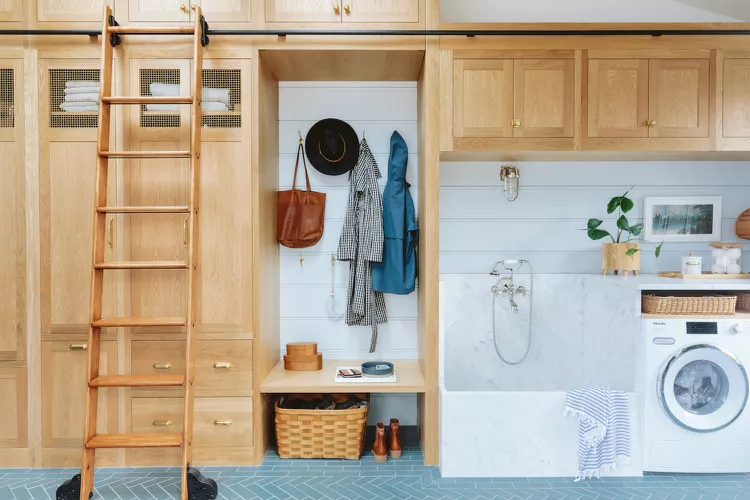
Small utility rooms become frustrating when storage spreads into the same floor space needed for laundry, cleaning, or household maintenance. The answer is usually to build upward rather than outward. Keeping the walking zone open while using walls, doors, shelves, and narrow gaps can dramatically increase usable storage without making the room feel harder to work in.
Protect the Working Area First
Start by identifying what movement the room requires. Washer and dryer doors need clearance, cabinets need room to open, and you may need space to carry baskets or reach valves and electrical connections.
Mark those areas mentally before adding anything. Keeping compact home references with your measurements can help you compare ideas without forgetting the room’s actual limitations.
Anything that regularly blocks the center aisle probably needs another home.
Measure Door and Appliance Movement
A shelf can fit perfectly on paper and still interfere with an appliance door. Measure depth as well as width, especially where front-loading machines, cabinet doors, or folding surfaces move into the room.
Use Vertical Storage Before Floor Storage
Open walls are valuable in a tight utility room. Shallow shelves above appliances can hold detergent, cloths, spare supplies, and lightweight household items without taking away walking space.
Wall rails and hooks work well for dustpans, brushes, small baskets, or reusable bags. Browsing small-space reading may give you design ideas, but test every idea against your room’s door swings, appliance clearances, and maintenance access.
Tall storage is useful only when frequently used items remain within comfortable reach.
Give Narrow Gaps a Specific Job
The slim gap beside a washing machine may be more useful than it appears. A narrow rolling cart can store bottles and small cleaning supplies while sliding away when access is needed.
| Available Space | Storage Approach | Best Use |
|---|---|---|
| Wall above machines | Shallow shelves | Daily laundry supplies |
| Narrow side gap | Slim rolling cart | Bottles and refills |
| Back of door | Hanging organizer | Small lightweight items |
| High shelf | Labeled container | Rarely used supplies |
Before filling every gap, consider whether an appliance may eventually need repair or replacement. Practical storage resources can accompany your own room plan, but permanent fittings shouldn’t prevent equipment from being moved.
Separate Daily Supplies From Backstock
A small room feels crowded when every refill is stored beside the container currently in use. Keep one accessible detergent, stain product, or cleaning spray nearby and place bulk extras higher up or elsewhere.
This also makes it easier to see when something genuinely needs replacing.
Use Containers for Categories, Not Everything
Containers help when they group related objects such as cloths, dryer accessories, or cleaning refills. Too many tiny bins can waste shelf space and create another layer of searching.
Choose containers based on what they need to hold rather than trying to make every shelf look identical.
Where Storage Plans Often Go Wrong
Adding storage can make a utility room worse when capacity becomes the only goal. Deep shelves may extend into headroom, large hampers can block appliance doors, and floor-standing cabinets can shrink an already narrow walkway.
Another mistake is storing rarely used household items in the easiest-to-reach locations. Prime space should serve everyday tasks. A small utility room functions better with a modest amount of well-positioned storage than with every inch packed.
Frequently Asked Questions
What is the best storage for a narrow laundry room?
Shallow wall shelves, hooks, compact carts, and door-mounted organizers usually preserve more floor space than deep freestanding furniture. The best choice depends on appliance movement and the width of the walking area.
Can shelves be installed directly above a washer or dryer?
They often can, but adequate clearance and access should remain around the appliances. Follow equipment guidance and make sure shelves don’t interfere with connections, controls, ventilation, doors, or future servicing.
How can I make a utility room look less cluttered?
Reduce duplicate supplies, group similar items, keep frequently used products together, and move excess stock away from eye level. Clear walking surfaces usually make a bigger visual difference than matching containers.
Make Movement the Measure of Success
A small utility room shouldn’t be judged by how much it can hold. Judge it by how easily you can complete the tasks the room exists for. Keep the floor clear, move storage upward, protect appliance access, and reserve convenient shelves for everyday supplies. Storage that doesn’t interfere with movement will remain useful long after the room is reorganized.


