
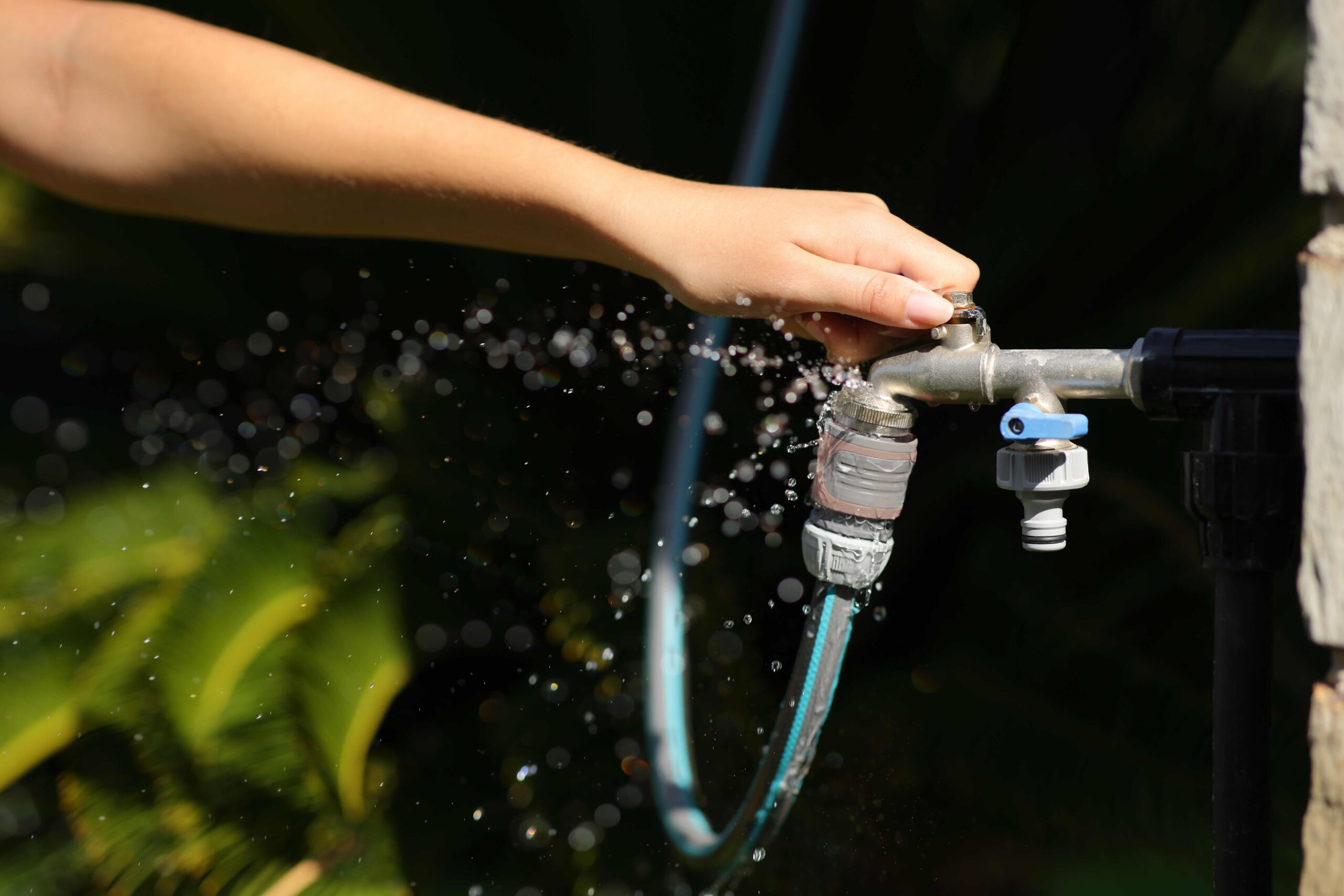
An outdoor faucet that drips slowly can waste water in warm weather and create a bigger problem once temperatures fall. The leak may come from the handle, spout, vacuum breaker, or piping behind the wall. Fixing the source before freezing conditions arrive helps protect both the faucet and the water line feeding it.
Identify Exactly Where the Faucet Is Leaking
Dry the faucet completely and turn the water on briefly. Watch whether moisture appears around the handle, beneath a cap, at the hose connection, or directly from the spout after shutoff.
A drip from the spout often points to a worn washer or internal cartridge. Moisture around the handle is more likely to involve the packing area or stem.
Check for Hidden Wall Leaks
Water appearing where the faucet enters the siding deserves more attention. A damaged frost-free faucet or split pipe can release water inside the wall whenever the valve is opened.
Stop using the fixture if you suspect an internal leak until the piping can be inspected.
Repair Minor Drips Before Cold Weather
Before disassembling an outdoor faucet, shut off its dedicated indoor valve if one exists and relieve pressure at the exterior fixture. Never work on a pressurized valve while attempting to remove the stem.
Helpful exterior home maintenance ideas can complement routine checks around siding, drainage, plumbing penetrations, and weather-exposed fixtures.
Traditional compression faucets often contain a replaceable washer at the end of the stem. A damaged washer or worn valve seat can keep water from stopping completely.
Inspect Hose Connections and Vacuum Breakers
A garden hose washer can become flattened, cracked, or displaced, causing water to spray around the threaded connection rather than pass cleanly into the hose.
Homeowners building a seasonal checklist can use practical household planning alongside plumbing inspections to catch outdoor maintenance problems before winter.
Some faucets also have anti-siphon or vacuum-breaker components near the outlet. Leaking from this area may require replacing the specific cap, seal, or vacuum-breaker assembly.
| Leak Location | Possible Cause | First Check |
|---|---|---|
| Spout | Worn washer | Inspect valve stem |
| Handle | Packing problem | Check packing nut |
| Hose threads | Damaged washer | Replace hose gasket |
| Wall opening | Split pipe | Stop use and inspect |
Prepare the Faucet for Freezing Temperatures
Disconnect every garden hose before freezing weather. A connected hose can trap water inside some frost-free faucets, defeating the drainage feature intended to protect the pipe.
Seasonal home styling and care resources can also serve as reminders to include exterior fixtures when preparing the property for weather changes.
If your plumbing has an interior shutoff for the outdoor line, close it and open the exterior faucet to drain remaining water. Follow the configuration of your particular plumbing system rather than assuming every faucet is winterized the same way.
Common Fixes That Don’t Solve the Real Problem
Wrapping a dripping faucet in insulation does not repair the leak. Insulation may provide limited protection from cold, but trapped water can still freeze if the underlying valve or pipe remains full.
Another mistake is tightening every visible nut aggressively. Packing nuts sometimes need a slight adjustment, but excessive pressure can damage threads or internal components. If a frost-free faucet leaks only while running, the pipe body behind the wall may be damaged.
Frequently Asked Questions
Why does my outdoor faucet drip after I turn it off?
A worn washer, cartridge, valve seat, or internal seal may prevent the valve from closing completely. A few remaining drops can be normal drainage, but continuous dripping indicates that water is still passing through the valve.
Should I leave an outdoor faucet dripping during winter?
Winter practices depend on the plumbing design, local climate, insulation, and location of the pipe. Intentionally leaving an exterior faucet dripping is not a universal solution. Proper winterization of the line is generally more dependable.
Why does water leak inside when I use my outdoor faucet?
A cracked or split section of pipe behind the wall may release water only when the faucet is opened. Stop using the fixture and inspect the interior side promptly because hidden moisture can damage insulation, drywall, wood, or other building materials.
Fix the Drip Before the Temperature Drops
An outdoor faucet deserves attention long before ice forms. Determine whether the leak comes from the valve, hose connection, vacuum breaker, or piping behind the wall, then repair the actual failure. Disconnect hoses and winterize the line according to its design. Hidden wall leakage or damaged piping is a good reason to bring in a plumber rather than keep testing the faucet.


